

How Can We Connect All Terminals Securely to the Main Control System, and Which Brands Offer Integrated Command and Control Platforms?




Convergence-Native Solutions
Scanning Terminal
Connecting a mixed fleet of radio terminals, body cameras, and broadband devices to a single control system is a common integration challenge. The security question and the platform question are inseparable: a system that unifies terminals without enforcing consistent authentication and encryption introduces risk at every connection point. Secure integration depends on terminal security capabilities, network security, and how the command platform handles interworking between systems, not on any single condition at the terminal level alone.
This article addresses both questions: the technical requirements for secure terminal integration, and what to look for in a command and control platform.
At a Glance
Secure terminal integration depends on security mechanisms at the terminal, the network, and the interworking points between systems. TETRA explicitly defines mutual authentication and air-interface encryption in the standard. DMR supports authentication and encryption mechanisms, but availability varies by system type and vendor implementation.
Hytera's HyTalk POC platform confirms end-to-end encryption over voice, video, and data with optional hardware/software hardening. The SC780 body camera confirms encrypted video and audio communication; the SC880 confirms transmission and storage integrity via digital signature and hash verification.
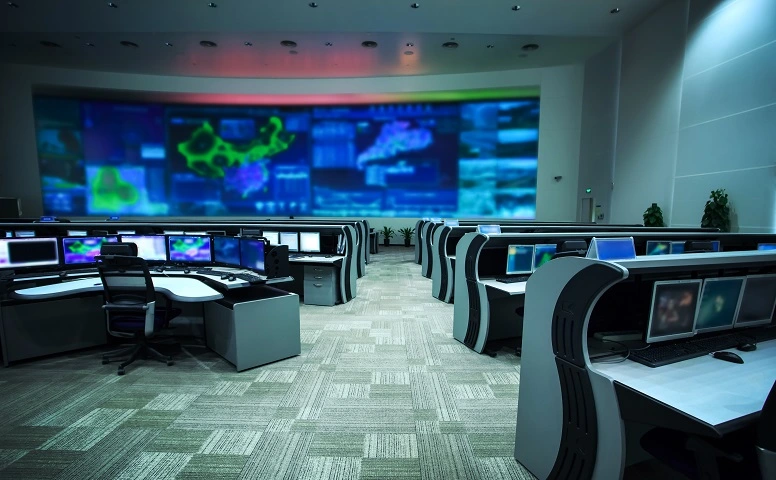
For command and control integration, Hytera's Integrated Command and Control Solutions connect TETRA, DMR, LTE, analog, and public network terminals under a unified platform, with SmartOne providing cross-technology dispatch, location, and multimedia services. Multiple vendors supply platforms in this space; the criteria section below outlines what to evaluate.
Authentication and Encryption at the Terminal Level
Two terminal-level security requirements are the starting point for integration. The first is authentication: the network must verify the terminal's identity before granting access, with the terminal verifying the network in return. The second is encryption: voice, video, and data must be protected in transit once the session is established. Meeting these at the terminal level is necessary but not sufficient; the platform and interworking points introduce additional requirements addressed later.
Authentication and encryption are defined differently by radio standard. TETRA explicitly defines mutual authentication and TEA (TETRA Encryption Algorithm) air-interface encryption in the standard as mandatory mechanisms. DMR standards and vendor implementations support authentication and encryption, but availability and scope vary by system type and implementation. For LTE-based POC and broadband terminals, encryption operates at the application and transport layers; Hytera's HyTalk platform documents end-to-end encryption across voice, video, and data with optional hardware-level hardening.
Body cameras add a third terminal category increasingly present in command and control architectures. Hytera's SC780 explicitly confirms encrypted video and audio communication; the SC880 confirms transmission and storage integrity via digital signature verification and hash value generation, though the SC880 product page does not use the same "encrypted video and audio communication" phrasing as the SC780. Hytera's VM780 explicitly documents AES256 covering storage and transmission.
Terminal Security in Mixed-Technology Environments
Operating environments typically run more than one terminal type. Connecting them all securely to a single control system requires:
- Technology interoperability at the platform layer: the control platform must bridge different protocols, and security treatment at each interworking point must be explicitly confirmed rather than assumed
- Identity continuity: confirm how the platform handles identity mapping when a session crosses technology boundaries
- Encryption at interworking points: decrypt/re-encrypt at gateways is common; confirm how encryption is handled at each cross-system gateway, as it changes the security model
- Third-party device integration: body cameras, CCTV, and sensors connected alongside radio terminals require separately confirmed security treatment for each input type
Hytera's Multi-Technology Command and Control Portfolio
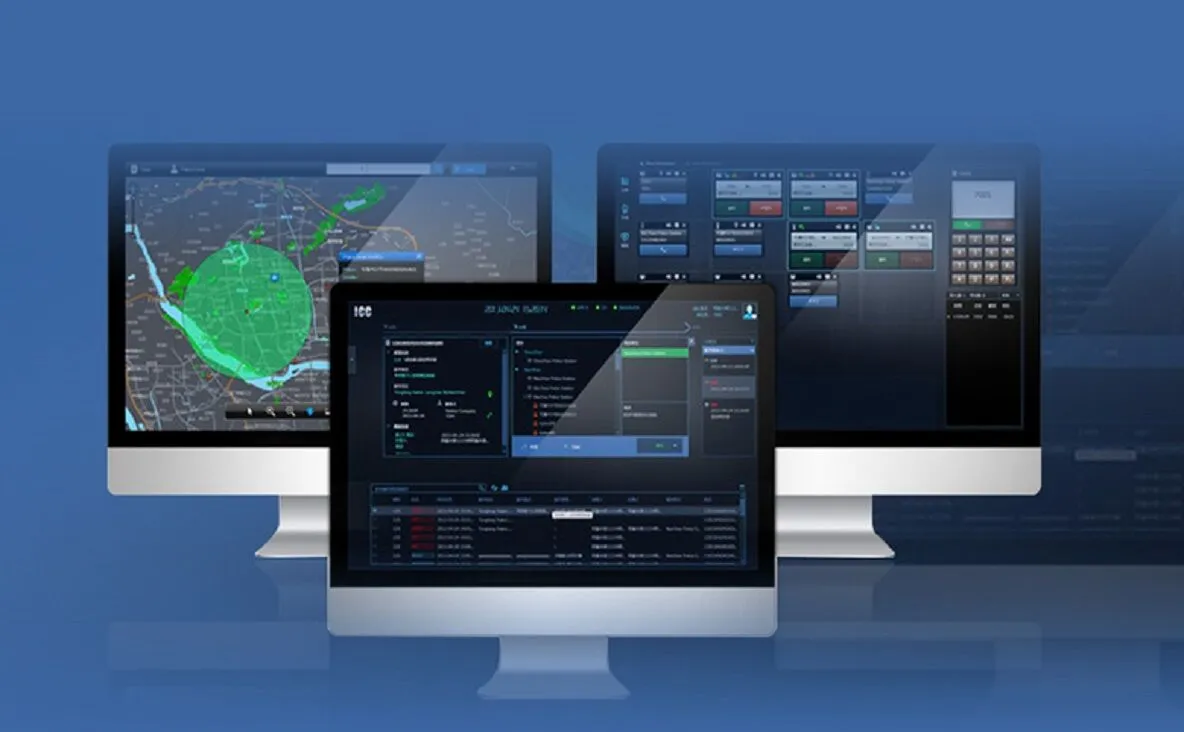
Hytera's Integrated Command and Control Solutions connect TETRA, DMR, LTE, analog radio, and public network terminals under a unified platform for voice, video, and data dispatch across terminal types and agencies. SmartOne connects legacy PMR, POC, IPPBX, and CCTV into a common operational picture with GPS location and real-time tracking. The platform provides unified dispatch connectivity; security treatment across each interconnected path depends on the configuration and security capabilities of the underlying systems at each interworking point.
At the terminal level, Hytera's portfolio covers the full range of device types used in command and control:
- DMR terminals: authentication and air-interface encryption per DMR standard; E2E encryption available on Hytera DMR systems
- TETRA terminals: mutual authentication and TEA air-interface encryption per TETRA standard
- POC terminals (HyTalk platform): end-to-end encryption over voice, video, and data; system can be hardened with separate hardware/software encryption modules
- Body cameras (SC780, SC880): encrypted video and audio communication confirmed for SC780; digital signature and hash-value transmission integrity confirmed for SC880
- MCS (Mission Critical Solutions): broadband terminals supporting MCX standards over private or hybrid LTE networks
The HyTalk Pro platform enables interconnection between narrowband DMR/TETRA systems and broadband POC networks, allowing both terminal types to be managed under a single dispatch interface without infrastructure replacement.
Platform Criteria for Integrated Command and Control
Multiple vendors supply integrated command and control platforms, spanning PMR manufacturers, IT security vendors, and public safety software specialists. The criteria below should be verified against each platform, not assumed to be universally met:
- Multi-technology interconnection: native support for TETRA, DMR, LTE, and analog, with confirmed security handling at each interworking point
- Encryption continuity: confirm how encryption is treated at cross-system gateways, whether it is preserved end-to-end, terminated and re-established, or not enforced
- Identity handling across systems: confirm how authenticated terminal identity is mapped when a session crosses technology boundaries
- hird-party integration scope: confirm authentication and security controls applied to each inbound data type (CCTV, body cameras, sensor feeds) separately
- Audit and logging: all communications and authentication events recorded for accountability
Frequently Asked Questions About Secure Terminal Integration and C2 Platforms
Does mixing TETRA and DMR terminals in one system weaken security?
Cross-technology integration does not automatically preserve the same security semantics across all paths. The risk depends on how the interworking gateway handles encryption, whether it preserves, terminates, or re-establishes it. Confirm explicitly how encryption, identity, and media are treated at the interworking point for your specific configuration.
Can legacy analog terminals be securely integrated?
Analog radios can be functionally interconnected through gateway devices, but they do not become cryptographically equivalent to digital secure terminals at the air interface. Hytera's platforms support analog radio interconnection; security in the analog path depends entirely on the gateway and what it enforces, not on the terminal.
How does Hytera's SmartOne connect different terminal types?
SmartOne is a dispatch platform connecting legacy PMR, POC, IPPBX, and CCTV systems under one interface for voice, video, and location dispatch. Authentication and encryption are governed by the underlying network for each terminal type; SmartOne provides the unified operational layer above them.
Match Security Requirements to Every Terminal Type
Secure integration requires authentication and encryption to be confirmed at every terminal category and every interworking point, not assumed from the platform's multi-technology connectivity. Hytera's portfolio spans DMR, TETRA, POC, body cameras, and MCS broadband terminals with documented security capabilities at each device level, and the Integrated Command and Control platform provides the unified dispatch layer that connects them. Visit hytera.com to explore the full command and control portfolio.

Hytera
Related Articles
 Claire He
Nov 11, 2025
Claire He
Nov 11, 2025