

What Radios Are Actually Designed for Logistics? A Deep Dive into PoC vs. DMR Solutions




PoC & MCS
PoC Radio
Logistics operations run on coordination. From warehouse dispatch to last-mile delivery, drivers and ground crews rely on instant, reliable communication to keep freight moving on schedule.
Choosing the wrong radio for a logistics environment means delayed dispatches, missed coordination windows, and unnecessary infrastructure investment. This article walks through the two main deployment paths and the specific Hytera products best suited for each.
The Communication Challenges Logistics Operations Actually Face
Logistics environments are deceptively demanding. Warehouses generate noise from forklifts and conveyor systems. Delivery fleets span wide geographic areas, sometimes crossing regional network boundaries. Depot yards require vehicle-to-control-room communication across open, reflective surfaces that can cause RF interference.
Unlike manufacturing plants or refineries, logistics sites typically involve a relatively small number of active users spread across a large coverage area. That ratio matters when sizing a communication system, because the priority is broad geographic reach rather than high channel density. The right technology choice hinges on one practical question: how reliable is LTE/4G coverage across the full operational area?
Understanding the Two Deployment Paths
Modern professional radio solutions for logistics fall into two broad categories, and selecting between them requires an honest assessment of local network conditions. To narrow down the right approach, procurement teams should evaluate three factors in sequence:
- Public network availability. Is LTE/4G coverage consistent across the full operational area, including remote depots, rural corridors, and cross-border routes?
- User density vs. coverage footprint. How many active radio users will the system support, and over what geographic area? A low user count across a large footprint favors a lean private network over a complex trunked system.
- Deployment timeline and capital budget. POC solutions require no repeater or tower construction, making deployment significantly faster than building a private radio network. Private DMR networks require base station installation but deliver complete independence from carrier reliability.
Working through these three questions in order will point clearly toward one of the two paths described below.
When Public Network Coverage Is Strong: The POC Approach
In countries and regions with dense, reliable LTE/4G coverage, a POC solution removes the need to build any private radio infrastructure at all. The entire system runs over the carrier network, which means significantly faster deployment and lower capital expenditure compared to a private network build.
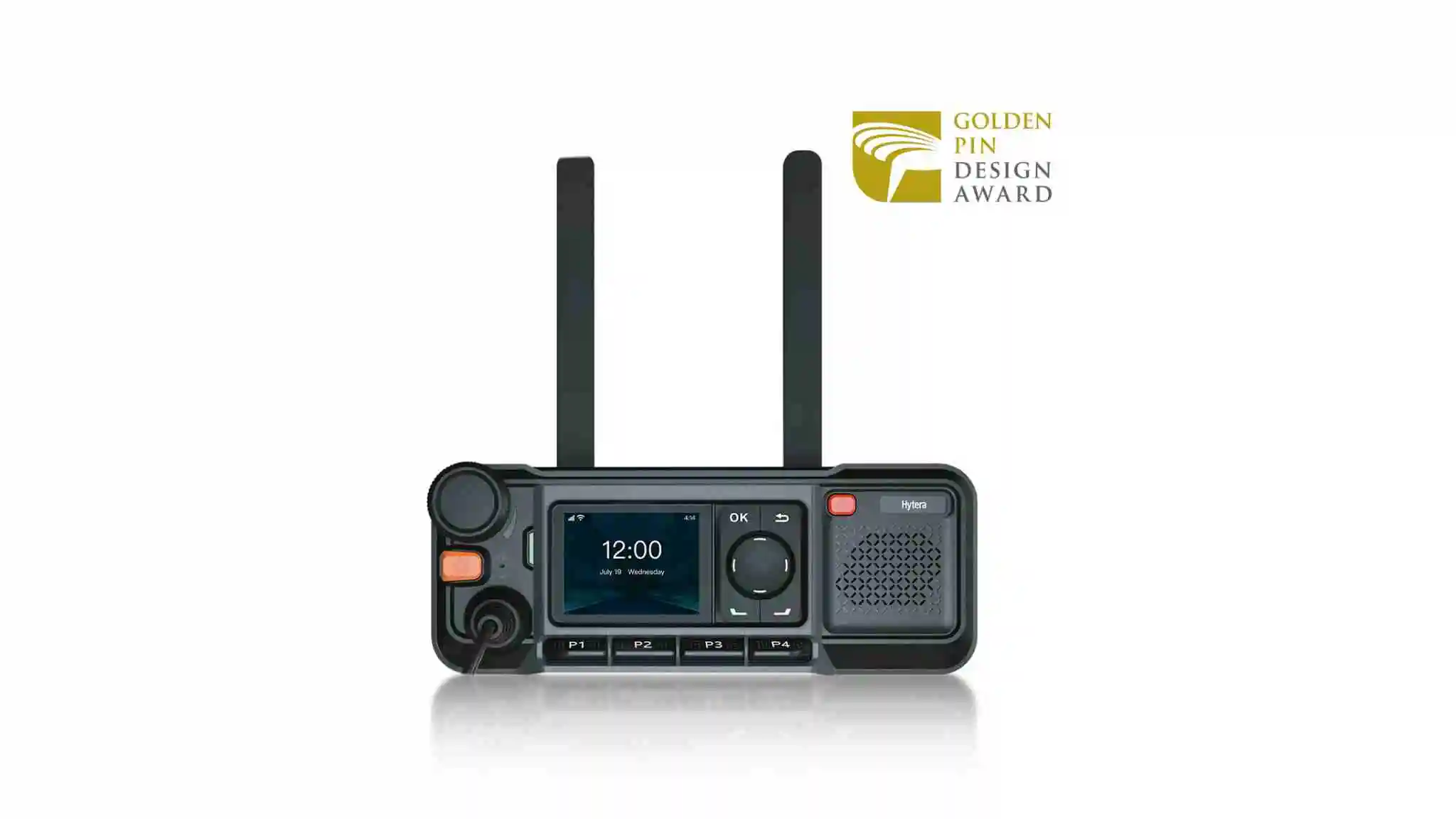
Hytera's POC portfolio is well suited to this scenario. For fleet and vehicle-mounted applications, the MNC360 in-vehicle radio supports GPS/GLONASS/BDS/AGPS multi-mode positioning and integrates with fleet dispatch applications via Android APIs, making it a practical choice for long-haul or regional delivery operations.For personnel on foot in depots or warehouses, the P50 and P50 Pro portable radios offer a ruggedized IP68 form factor with clear audio in high-noise environments. Both support A-GPS, which improves positioning accuracy in indoor settings where standard GPS signal is limited.
3The core advantage of this approach is deployment efficiency. Because POC relies entirely on existing carrier infrastructure, organisations can activate wide-area communication without any site construction, avoiding the lead time that a private network build would require.
When Public Network Coverage Is Unreliable: DMR Tier 2 Private Networks
In rural distribution corridors, cross-border freight routes, or markets where carrier infrastructure is sparse or inconsistent, a POC-dependent solution introduces unacceptable communication risk. For these environments, a private DMR (Digital Mobile Radio) Tier 2 network gives the operator direct control over coverage planning and system availability, independent of any carrier.
DMR Tier 2 is particularly well matched to the logistics use case because of how the technology scales. With relatively few active users spread across a large geographic footprint, a small number of base stations can address wide-area communication needs without the overhead of a complex trunked system. Actual coverage depends on frequency band, transmit power, antenna height, terrain, and repeater placement. Site planning should be based on RF survey and coverage modelling rather than fixed-range assumptions.
- For terminal selection in this scenario, Hytera offers two product lines that align directly with logistics workflows:
- For handheld users in depots and distribution centres: the HP5 series portable radio, rated IP67 and MIL-STD-810H with AI noise cancellation, built for the demands of warehouse and yard operations
- For drivers and vehicle-based crews: the HM6 series in-vehicle radio, supporting DMR voice communications, GPS location, and data services across extended operational areas
Both product lines support standard DMR voice services including group and individual calls. GPS positioning and emergency alert functions are available depending on model variant and system configuration; terminal selection should be confirmed with the Hytera regional team.
Frequently Asked Questions About Radios for Logistics Environments
Do logistics operations really need a dedicated radio, or is a mobile phone sufficient?
Mobile phones lack the push-to-talk speed, group communication capability, and network priority that logistics coordination demands. In high-traffic periods or in areas with congested carrier networks, call setup times degrade unpredictably. Dedicated professional radios, whether POC or DMR, are purpose-built for the response times and reliability that logistics workflows require.
How far does a DMR Tier 2 private network reach?
There is no fixed coverage figure for DMR Tier 2. Coverage depends on frequency band, transmit power, antenna height, terrain, obstacles, and repeater configuration. A properly planned DMR Tier 2 network can scale from small-site operations to wide-area distribution corridors; site design should be based on RF survey and coverage modelling for the specific deployment environment.
Can POC radios and DMR radios work together on the same system?
POC and DMR terminals do not automatically interoperate. There are two practical approaches. The first is platform-level integration: with a Hytera convergence platform such as HyTalk Pro, POC and DMR users can be interconnected and dispatched together across both networks. The second is dual-mode terminals: Hytera offers handsets that support both POC and DMR on a single device with one number, and can automatically switch to whichever network provides better coverage at a given location, ensuring communication continuity without manual intervention.
Choose the Solution That Matches Your Network Reality
Matching the right radio solution to a logistics environment comes down to network reality. Where LTE/4G coverage is strong, Hytera POC products offer a fast, low-infrastructure path to wide-area communication; where it is not, a DMR Tier 2 private network delivers operator-controlled coverage that keeps freight operations running without depending on any carrier. Explore Hytera's full logistics communications portfolio at hytera.com/en.