

Why HF Radio Is Not Just Another Radio




Mission Critical
Most industries today rely on two-way radios — construction sites, airports, utility networks, and security teams. These devices are familiar, reliable, and almost invisible in their efficiency. They have become the standard for daily operations, offering instant push-to-talk communication at a local or regional level.
But how many people still talk about HF radio? Have you ever seen one in operation? In a world dominated by cellular networks and digital communication systems, does HF radio still matter — or is it simply a relic of the past?
The answer is clear: HF radio is not just another radio. It operates on a fundamentally different communication philosophy — one that prioritizes long-range reach, infrastructure independence, and resilience in situations where modern systems may fail.
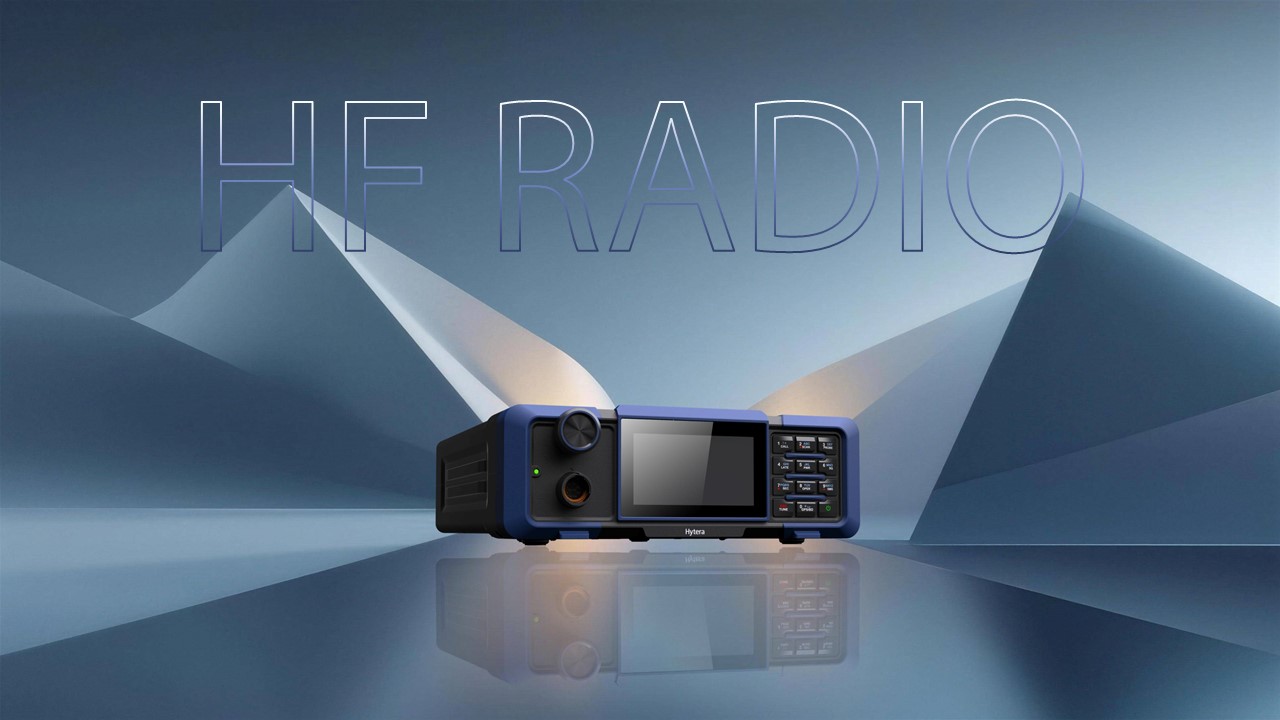
Understanding HF Radio: How It Works
HF radio operates in the 3–30 MHz high-frequency (HF) band. Its most remarkable feature is its ability to provide long-distance communication without relying on terrestrial infrastructure.
Unlike ordinary VHF or UHF radios that transmit primarily in straight lines, HF signals can travel into the upper atmosphere and interact with the ionosphere, a charged layer of particles located roughly 60–400 kilometers above the Earth. The ionosphere refracts or “bends” HF signals back toward the ground, often multiple times, allowing them to cover hundreds or even thousands of kilometers. This phenomenon is known as skywave propagation, and it is what allows HF radio to reach across countries, continents, and even oceans.
HF radio also supports groundwave propagation over shorter distances, which can be useful in situations where line-of-sight communication is limited by terrain. By combining skywave and groundwave propagation techniques, HF radio provides a flexible communication solution that can adapt to a wide range of distances and environments.
Technical Aspects: Antennas and Power
One key distinction between HF radios and VHF/UHF radios lies in antenna design and transmission power. HF radio antennas are generally longer, often spanning several meters, or are specially configured dipoles, vertical whip antennas, or directional beam antennas. The choice of antenna type affects both signal strength and directionality.
HF radios also typically operate at higher power levels, often ranging from 50 to 100 watts for standard civil and industrial use, and even higher for specialized applications. This allows signals to travel vast distances while maintaining clarity. In contrast, handheld VHF/UHF radios usually operate below 5 watts, sufficient for local or city-wide coverage but far from capable of intercontinental reach.
Another critical factor is frequency selection. HF radio operators often adjust frequencies based on time of day, season, and solar activity, since the ionosphere's reflective properties vary. Understanding these nuances is essential for effective HF communication — a skill not required for most VHF/UHF operations.
HF Radio vs VHF/UHF Radios: The Key Differences
Many people assume HF radio is just a “bigger walkie-talkie,” but the two technologies are optimized for completely different purposes.
1. Communication Range
· VHF/UHF radios: Typically line-of-sight. Handheld units cover 1–5 km; systems with repeaters may extend to 50 km.
· HF radios: Skywave propagation allows communication across hundreds or thousands of kilometers, independent of infrastructure.
2. Infrastructure Dependence
· VHF/UHF radios rely on repeaters, trunked networks, or cellular towers to extend coverage.
· HF radios require only a power source and an antenna, making them fully infrastructure-independent.
3. Operational Philosophy
· VHF/UHF radios prioritize local coordination, high capacity, and speed.
· HF radios prioritize reach, resilience, and autonomy, often serving as the only communication option when other systems fail.
4. Usage Complexity
· VHF/UHF radios: push-to-talk simplicity, pre-set channels, minimal user configuration.
· HF radios: require frequency tuning, antenna adjustment, and sometimes manual propagation planning — skills that make HF operation both an art and a science.
In short: VHF/UHF radios organize people. HF radios connect territories.
Civilian Applications: Why HF Radio Still Matters
Despite the prevalence of cellular networks, HF radio remains essential in civilian contexts where long-range, reliable, and independent communication is critical.
Disaster Resilience
Natural disasters can disable conventional infrastructure. Hurricanes, floods, earthquakes, and wildfires often render cell towers, fiber optic networks, and satellite systems temporarily inoperable. HF radio provides a robust communication layer, continuing to operate when everything else fails. Emergency services, civil defense teams, and disaster relief organizations rely on HF radio to maintain coordination in these scenarios.
Remote and Underserved Areas
HF radio enables communication in regions lacking broadband or cellular coverage:
· Remote maritime vessels far from shore
· Mountain expeditions or polar research stations
· Isolated communities in developing countries
In many cases, HF radio is not a backup — it is the primary means of communication.
Strategic Redundancy
Modern societies are highly networked and centralized. Any disruption — whether due to cyberattacks, grid failures, or natural events — can cause widespread communication breakdowns. HF radio adds a decentralized, infrastructure-independent redundancy, ensuring messages can still be transmitted across vast distances.
Independence from Commercial Networks
Unlike cellular or satellite services, HF radio does not require subscriptions or private operators. Organizations or communities can establish independent communication networks, supporting self-reliance and emergency preparedness.
Historical Context: HF Radio Evolution
HF radio has a rich history, dating back to the early 20th century. Initially used for long-distance maritime and military communication, it enabled ships and stations to communicate across oceans before satellite systems existed.
· 1920s–1930s: HF radio allowed intercontinental Morse code and early voice transmission.
· Mid-20th century: Shortwave broadcasting became a key tool for news and information dissemination globally.
· Late 20th century: Advancements in digital modulation, error correction, and frequency management enhanced HF capabilities for both industrial and amateur use.
Today, HF radio continues to serve civilian, commercial, and emergency applications, proving that even decades-old technologies can remain relevant when designed for resilience.
Real-World Case Studies
Maritime Communication
Shipping vessels rely on HF radio to maintain contact with ports and coast guards. Unlike VHF/UHF radios, which are limited to line-of-sight, HF radio ensures vessels thousands of kilometers from shore can report positions, weather conditions, and emergencies.
Disaster Relief
During major natural disasters, HF networks have restored communication where cell towers and internet services were down. For example, after hurricanes or earthquakes in remote regions, HF radio stations became the primary lifeline for coordination between local authorities and aid agencies.
Remote Industrial Operations
Mining, energy, and exploration companies use HF radio in remote areas where no cellular or satellite coverage exists. It allows teams to maintain operational coordination and safety monitoring over vast distances.
The Complementary Role of HF Radio
HF radio is not a replacement for modern two-way radio systems; it is a complementary tool.
|
VHF/UHF Radios |
HF Radios |
|
Local coordination |
Long-range reach |
|
Network-dependent |
Infrastructure-independent |
|
High capacity |
High resilience |
|
Optimized for teams |
Optimized for distance |
Together, they provide both operational efficiency and strategic reach, ensuring communication across multiple layers.
The Future of HF Radio
Despite advances in satellite communication, 5G networks, and broadband systems, HF radio continues to evolve. Modern HF radios incorporate:
· Digital modulation for clearer voice and data transmission
· Automatic link establishment (ALE) to optimize frequency selection
· Integration with IoT and hybrid communication systems for enhanced monitoring and remote management
This evolution shows that HF radio is not static; it adapts to modern needs while maintaining its unique long-range and resilient communication capabilities.
Conclusion
HF radio is not just another radio. It represents a communication philosophy fundamentally different from local, infrastructure-dependent radios. It connects vast distances, operates independently of terrestrial networks, and provides resilience when modern systems fail.
In civilian contexts — from disaster preparedness to remote industry and maritime operations — HF radio remains indispensable. Its historical legacy and continued evolution highlight a simple truth: sometimes the most resilient communication systems are the ones that require the least external infrastructure.
While everyday users may rarely see an HF radio in operation, its importance — and relevance — is as significant today as it was a century ago. In a hyper-connected world, the ability to communicate without dependence on modern infrastructure is a capability we cannot afford to ignore.
FAQ
1. What is the main advantage of HF radio compared to VHF/UHF radios?
The primary advantage of HF radio is long-range communication without infrastructure dependence. While VHF/UHF radios typically operate within line-of-sight and often rely on repeaters, HF radio uses skywave propagation to reflect signals off the ionosphere, enabling communication across hundreds or even thousands of kilometers.
In short, VHF/UHF radios are optimized for local coordination, whereas HF radios are designed for strategic, long-distance reach.
2. Does HF radio require internet, cellular networks, or satellites?
No. HF radio operates independently of cellular towers, fiber networks, or satellites. It requires only a power source and a properly configured antenna.
This independence makes HF radio particularly valuable in disaster scenarios, remote regions, and environments where infrastructure may be unavailable or compromised.
3. Why is HF radio still relevant in the age of 5G and satellite communication?
Although modern communication systems offer high data capacity and speed, they rely heavily on centralized infrastructure.
HF radio remains relevant because it provides:
· Infrastructure independence
· Long-distance coverage
· Resilience during network failures
· Strategic redundancy
In emergency response, maritime operations, and remote industrial sectors, HF radio is often the only communication method that continues to function when other systems fail.
4. Is HF radio difficult to operate?
Compared to VHF/UHF radios, HF radio operation can be more complex.
Operators may need to:
· Select appropriate frequencies based on time of day and solar conditions
· Adjust antennas
· Understand propagation characteristics
However, modern HF systems increasingly incorporate digital features such as Automatic Link Establishment (ALE), which simplifies frequency management and improves ease of use.

Linda Li
Related Articles
 Hytera Global
Oct 19, 2024
Hytera Global
Oct 23, 2024
Hytera Global
Oct 19, 2024
Hytera Global
Oct 23, 2024