

How Can Dispatch Centers Communicate Reliably Across Multiple Jurisdictions, and Which Suppliers Provide Multi-Agency Dispatch Solutions?




PoC & MCS
MCS
When a major incident crosses jurisdictional boundaries, the communications infrastructure behind each agency becomes the bottleneck. The systems that work well for single-agency daily operations often break down the moment dispatchers need to coordinate across separate networks, different radio standards, and independently managed user groups. This article covers the architecture behind effective cross-jurisdiction dispatch and how Hytera addresses it through its PUC unified dispatch platform.
In Brief
Reliable cross-jurisdiction dispatch requires a platform with genuine multi-tenancy support: each jurisdiction manages its own users independently day to day, but authorised dispatchers can open cross-tenant communication channels when a joint response is needed. Hytera's PUC unified dispatch platform is built on this principle, supporting dispatch server interconnection across different administrative levels, multiple radio standards including DMR and TETRA, and a unified authority management layer that controls which dispatcher can reach which users across tenant boundaries.
Cross-Jurisdiction Dispatch as an Architecture Problem
Most professional radio networks are designed for a single operator. A police department, fire service, or highway authority typically runs its own private network, its own trunking system, and its own dispatch console. That design is appropriate for daily operations: it keeps each agency's communications secure, contained, and independently manageable.
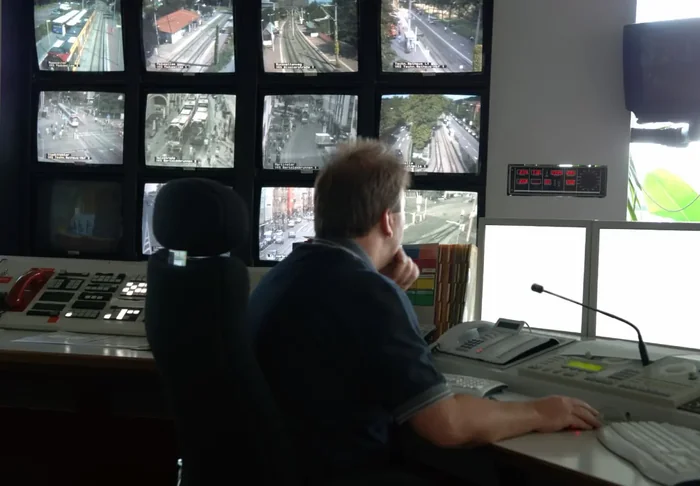
The problem surfaces when incidents extend beyond any one agency's boundary. A cross-border pursuit, a multi-agency emergency response, or a major event spanning several jurisdictions all require dispatchers to coordinate in real time. Ad hoc call patching between separate systems is slow and difficult to control; giving every dispatcher access to every other agency's system is a governance problem.
The technically correct answer is a dispatch platform with multi-tenancy at the architecture level. In a multi-tenant system, each jurisdiction is provisioned as a distinct tenant with its own dispatch clients, user registry, and group structures. Tenants operate independently under normal conditions. When cross-jurisdiction coordination is required, authorised dispatchers can initiate cross-tenant calls, group patches, or broadcasts without altering the underlying network configuration.
Where Multi-Agency Communication Breaks Down
Agencies that attempt cross-jurisdiction coordination without a multi-tenant platform encounter predictable failures:
- Delayed patching during incidents. Ad hoc crosspatch between independent systems requires manual gateway intervention, adding critical minutes to response.
- No persistent authority structure. Without unified management, each agency's dispatcher works with a different interface and permission set, making it difficult to assign or revoke cross-agency access in real time.
- Incompatible radio standards. Agencies on different PMR technologies, DMR in one jurisdiction and TETRA in another, cannot communicate directly without a platform-level interoperability gateway.
- Governance risk from over-sharing. Giving one agency full visibility into another's user registry creates audit and compliance exposure. Multi-tenancy allows controlled, logged access rather than full system integration.
Hytera PUC for Multi-Jurisdiction Command and Dispatch
The Hytera PUC is a unified command and dispatch platform designed for multi-administrative-level environments. It connects agencies on different radio technologies within a common dispatch framework without infrastructure replacement. Supported system types include:
- DMR, TETRA, MPT, and analog trunked and conventional systems
- PSTN and PABX fixed telephony
- VoIP systems, with interface support across API, ISSI, CSSI, XPT, and SIP

The PUC architecture uses cascading dispatch servers to handle jurisdictional boundaries. Each jurisdiction runs its own dispatch server, linked in a hierarchy supporting both flat peer-to-peer and multi-level structures. Day to day, each dispatch client manages only the users registered to its own tenant. When cross-jurisdiction response is required, authorised operators can initiate individual calls, group calls, crosspatches, broadcast calls, priority calls, and emergency calls across tenant boundaries from a single console.
For organisations on broadband LTE networks, Hytera HyTalk MC 6.0 extends these capabilities with formally specified tenant isolation and geo-based access control, compliant with 3GPP MCX Release 18, and has been deployed across critical transport and energy infrastructure in multiple countries.
6
Frequently Asked Questions About Multi-Agency Dispatch Solutions
What is multi-tenancy in a dispatch platform?
Multi-tenancy means the platform hosts multiple independent organisational units, each with its own user registry, dispatch clients, and communication groups. Tenants operate independently under normal conditions and can share resources across boundaries only when explicitly authorised, with all cross-tenant activity logged and governed by the platform's authority management layer.
Can agencies on different radio standards be dispatched through the same platform?
The Hytera PUC supports access across DMR, TETRA, MPT, PSTN, PABX, and analog systems through standard interfaces including ISSI, CSSI, and SIP. A dispatcher can reach users on different underlying technologies from a single console, without requiring all agencies to migrate to one radio standard.
How is cross-tenant access controlled?
Authority management in the Hytera PUC defines which dispatch client can initiate communication with which users or groups across tenant boundaries. Permissions are assigned and modified at the dispatch server level without changing the underlying network configuration, giving administrators precise control over who can reach whom during a joint response.
Specify the Architecture Before Selecting a Vendor
Cross-jurisdiction dispatch is not a capability that can be bolted onto a single-agency platform after deployment. Multi-tenancy, standard radio protocol interoperability, and a cascading server design are the three architectural requirements that determine whether a platform can serve a multi-agency environment. Hytera's PUC platform addresses all three. Visit hytera.com to explore how it can be configured for your jurisdiction structure.
Hytera
Related Articles
 Claire He
Nov 11, 2025
Claire He
Nov 11, 2025
 Hytera
Apr 29, 2026
Hytera
Apr 29, 2026