

DMR vs. TETRA: Hytera's Expert Guide to Choosing Your Two-way Radio




Two-way Radio
Executive Summary
The evolution from analog to digital radio systems has sharpened a pivotal debate for organizations seeking reliable communications: DMR (Digital Mobile Radio) or TETRA (Terrestrial Trunked Radio)? While both standards meet the stringent demands of mission-critical users across sectors like public safety, oil & gas, power utilities, and large-scale construction, their fundamental architectures cater to different operational priorities.
This expert guide leverages technical benchmarks, Hytera product insights, and real-world field experience to demystify DMR vs. TETRA, covering coverage, capacity, security, resilience, and hands-on operational impact. In this long-form analysis, you'll find actionable advice, nuanced trade-offs, and concrete examples that empower decision-makers to match the right radio technology to their unique missions and environments.
Introduction
Imagine this: an emergency response team in a sprawling rural valley struggles with patchy coverage while a bustling international airport manages thousands of users, each needing instantaneous, secure communications. Both face the same crossroads—DMR or TETRA?
This isn't merely a technological coin flip; it's a strategic choice that can shape business continuity, personnel safety, and operational costs for years to come.
At Hytera, we've seen how the “Quality vs. Quantity” paradox plays out on the front lines. Organizations must weigh spectral efficiency, network robustness, and real-world field resilience—going beyond what marketing brochures promise. If you're a security manager, IT buyer, or operational leader, the details matter: Will your system thrive in driving rain, sub-zero cold, or amidst urban radio clutter? Can it scale without blowing the budget or compromising mission success?
This guide walks you through the technical differences, operational realities, and human factors that influence the DMR vs. TETRA decision, drawing from European Telecommunications Standards Institute (ETSI) specifications, global user anecdotes, and Hytera's product legacy in critical communications.
Market Insights
The migration from analog to digital Private Mobile Radio (PMR) has redefined the landscape of team communications, raising both the capabilities and expectations of organizations in enterprise and high-stakes mission environments.
Core Architecture: TDMA Differences
DMR (ETSI TS 102 361) employs 2-slot TDMA in a 12.5 kHz channel, using robust 4FSK modulation. This architecture provides RF performance and sensitivity similar to analog radios—making it a seamless step up for teams migrating from legacy equipment.
TETRA (ETSI EN 300 392) utilizes a more complex approach with 4-slot TDMA in a 25 kHz channel using π/4 DQPSK modulation, supporting up to four simultaneous calls per channel and offering peak throughput around 36 kbit/s.
This underpins a fundamental market segmentation: DMR dominates wide-area, cost-sensitive deployments (utilities, logistics, field services), while TETRA excels where user density and trunking capacity are paramount (airports, metropolitan emergency services, oil refineries).
Coverage and Infrastructure Efficiency
Field studies and whitepapers tell a consistent story: for every DMR Tier III base station, organizations often require 2.0 to 2.5 TETRA sites to replicate downlink coverage in rural or challenging topographies. DMR's superior link budget—roughly a 4.3 dB advantage in radio sensitivity—translates into broader range, fewer towers, and lower infrastructure costs (Radio Resource/Tait Comparison).
Conversely, TETRA's trunked mode can manage hundreds of talk groups simultaneously, a necessity during city-wide emergencies, protests, or incidents involving multiple agencies. The trade-off? Higher base station cost, greater complexity, and more rigorous site planning.
Battery and Environmental Performance
DMR radios: Simpler modulation and efficient hardware design support longer battery life—users report 20–24 hours in standard duty cycles (e.g., Hytera P5 Series). In multi-channel scan mode, this can drop to 8–12 hours, highlighting the importance of matching device settings to real operational patterns.
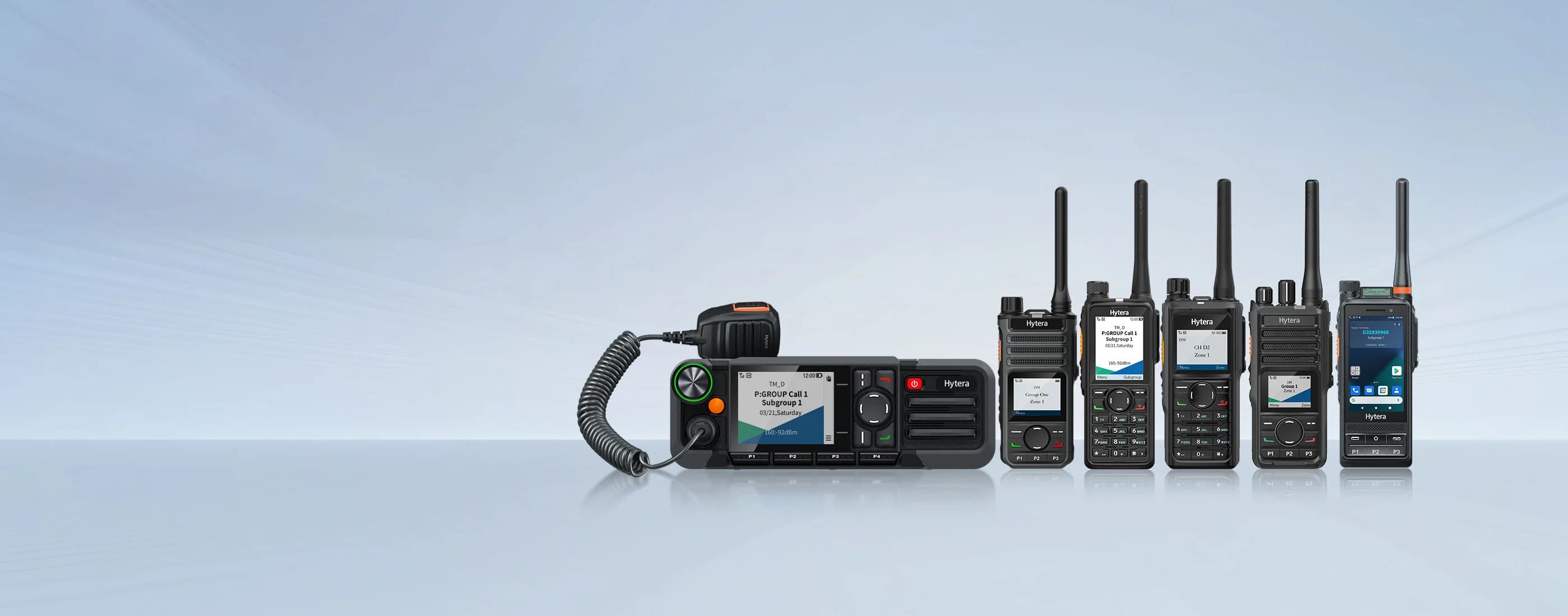
TETRA radios: Typical runtime is 16–20 hours, though recent designs with “True 3W” power management approach 18 hours. Batteries in TETRA radios generally cope better in extreme heat, but show slightly faster drain in cold environments.
Weather resilience is another differentiator. DMR's delay spread tolerance (28µs) outperforms TETRA's (15µs), making DMR more reliable in environments susceptible to multi-path interference—think canyons and dense urban corridors.
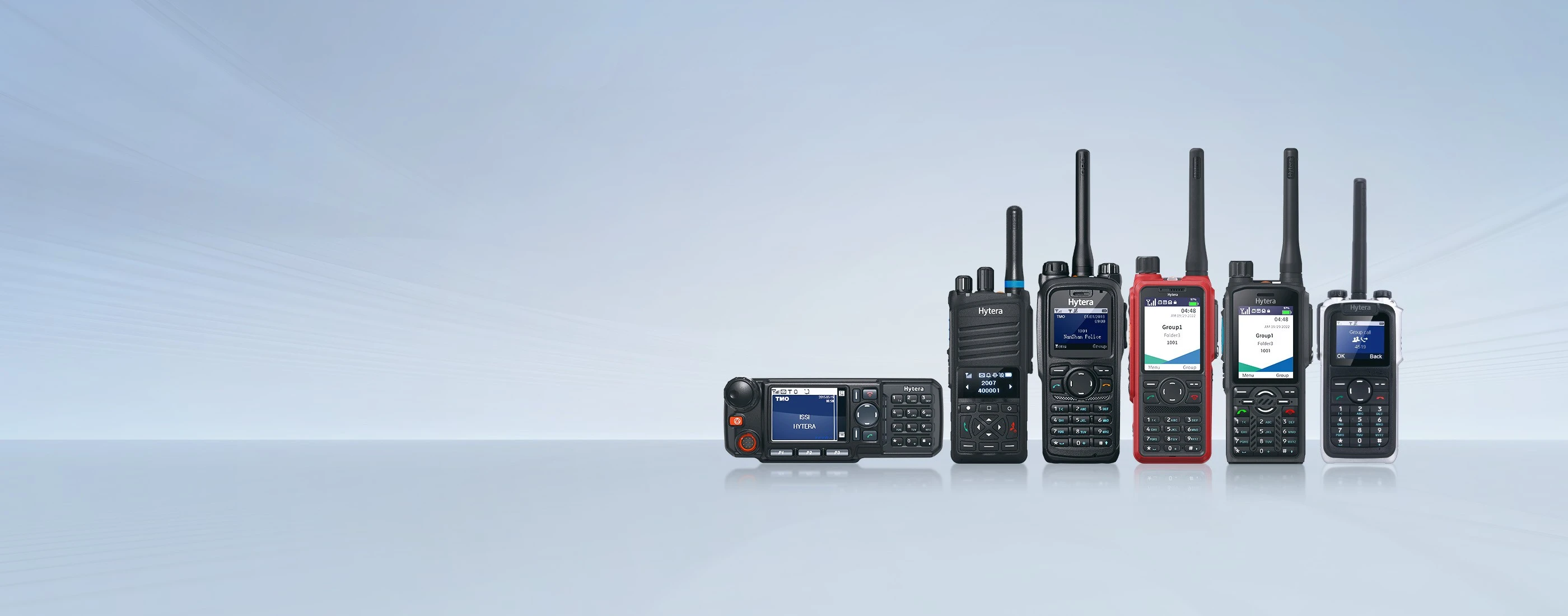
In hazardous operations—such as offshore platforms or chemical plants—devices like the Hytera PT890Ex (TETRA) offer ATEX/IECEx certification, explosion-proof materials, and enhanced sealing (IP68), maintaining communications where a single spark might mean disaster.
Security and Compliance
While both platforms offer advanced encryption, TETRA's suite is especially robust: end-to-end and air interface encryption come standard, aligning with the needs of government and public safety. DMR supplies standard encryption (AES-256), suitable for most commercial and industrial scenarios, but can be extended where operational requirements demand.
Real-World User & Deployment Insights
Public Safety users value TETRA's capacity and reliability during mass events, but note higher setup and calibration time, and the risk of trunking overload without proper network tuning.
Energy & Logistics teams advocate for DMR's lower cost, easier analog migration, and superior range, especially in rural installations, but sometimes bemoan audio noise rejection in highly electromagnetic environments.
Touchscreens, such as those on the Hytera smart radios, may struggle with biometrics in rain or with heavy gloves—physical PTT (push-to-talk) buttons remain indispensable for fire and emergency crews.
Product Relevance
Hytera sits squarely at the intersection of these needs, engineering products specifically tuned to the real-world demands of both DMR and TETRA users.
DMR: HP56X / HP56X UL913
Hytera HP56X / HP56X UL913: Designed for wide-area, cost-conscious deployments—ideal for logistics, transit, and construction. Its design delivers strong performance under variable conditions, while IP67 and optional UL913 intrinsic safety certifications support field use in dust-prone or potentially explosive environments.
TETRA: PT590, PT890Ex
PT590: Focuses on pure mission-critical performance—multi-group coordination, strong encryption, and trunking features tailored for city, riot, or disaster management.
PT890Ex: The gold standard in hazardous environments—a TETRA radio that combines true 3W output, silicon encapsulation to block dust/vapor ingress, and robust operation even in -30°C cold or highly explosive atmospheres (PT890Ex Official Specs).
| Feature | DMR (HP56X / HP56X UL913 ) |
TETRA (PT590 / PT890Ex) |
| Ideal User | Commercial, Construction, Energy | Public Safety, Oil & Gas, Emergency |
| Coverage Area | Wide-area (≥5W RF Power) | High-density urban (Trunking) |
| Complexity | Low; easy analog migration | High; requires dedicated trunking |
| Security | Standard (AES-256 upgradable) | E2EE + Air Interface Encryption |
| Weather | IP67/UL913 options | IP68 (2m/4h) + ATEX/IECEx |
Actionable Tips
Identify Your Coverage Priority:
If your operations are spread across rural or remote locations, or you're watching the bottom line, DMR typically yields greater “range per dollar.” You'll need fewer base stations and simpler planning.
In crowded metros, at airports, or in scenarios where dozens (or hundreds) of separate teams communicate simultaneously, TETRA's capacity and trunking features are game-changers.
Consider Environmental and Mission Risks:
For high-risk facilities (oil & gas, mining, chemical plants), check for ATEX/IECEx certification and proven performance in adverse conditions (IP68+). Hytera's PT890Ex is a class leader here.
If fieldwork includes temperature extremes or dynamic environmental threats, assess real-world battery and device tests—don't rely solely on lab specs. For instance, cold weather may knock 30% off DMR battery life, and some touchscreens may falter in rain or with gloves.
Plan for Operational Complexity:
DMR systems can usually be phased in over time, supporting gradual migration from analog. This lets teams adopt digital features stepwise.
TETRA, while more powerful, requires more intensive planning and calibration (installation can take 2–4 hours longer per site compared to DMR), plus ongoing management.
Protect Against Failure Modes:
In interference-prone or high-traffic areas, test for squelch latency (potential 2–3 second delays in opening channels) and default to “Open Voice Channel Mode” for emergency dispatch.
Ensure fallback/Direct Mode Operation (DMO) is available in TETRA installations—Hytera provides robust DMO in all mission-critical radios for resilience when infrastructure drops.
Leverage Vendor Experience:
Hytera offers sector-specific demonstrations, certified partner installation, and ongoing support—lean on these resources to tailor your system to both technical and human factors.
Review peer forums and user anecdotes to uncover hidden “pain points”; what works in the lab can sometimes come up short in a snowstorm, riot, or underground mine.
Anticipate Data & Security Needs:
If video or high-data applications are central (bodycams, telemetry), note DMR's limited throughput (usually under 2 kbit/s)—TETRA may better support multimedia, but at higher cost.
Weigh regulatory and organizational security mandates: TETRA's standard E2EE is sometimes a must for governmental or defense use.
Conclusion
There's no universal answer in the DMR vs. TETRA debate—only a series of trade-offs that reflect your organization's mission profile, geography, risk tolerance, and budget. Hytera's experience powering communications from rugged mountain search and rescue to bustling city command centers shows how the “right” system is the one that marries spectral and operational requirements with practical, hands-on reliability.
Choose DMR for cost-effective, wide-area coverage, gradual migration from analog, and reliable performance in mixed environments.
Choose TETRA where user density, group management, and encryption are non-negotiable, or where deployment hazard ratings are the highest.
Ultimately, your best partner is critical review: test real-world scenarios, consult peer experiences, and deploy demo units in your most challenging settings.
Sources
Coverage Technology Comparison: DMR vs. TETRA (Radio Resource/Tait White Paper)
RadioReference Forums — Real-World Experience with TETRA Radios
Hytera PT890Ex Official Product Page
DMR or TETRA: Hytera Blog on High-Risk Workplaces
Hytera DMR Radio Comparison Guide
Tait Communications: DMR or TETRA? Technical Comparison
What “True 3W” Really Means: Hytera TETRA Blog
DMR Association White Paper: Benefits and Features of DMR

Hytera Global
Related Articles
Hytera Global
Sept 29, 2024
 Linda Li
Jun 16, 2025
Linda Li
Jun 16, 2025