

Hytera Europe showcased its emergency communications portfolio at the Emergency Tech Show (ETS) 2026, held over two days in the UK.
The show brought Hytera into contact with professionals from search and rescue, fire and rescue, coastal response and emergency management organisations. Their work often takes place in areas where communications infrastructure is limited, damaged or unavailable, making reliable voice and data links essential to coordinating incidents and supporting responders.
SMC Gateway, whose integration capabilities connect digital radio networks with legacy paging systems, indoor location tracking and automated alerting platforms, including the GOV.UK Notify API, exhibited with Hytera at the booth. The combination brings radio communications and alerting workflows together for emergency-service operations.
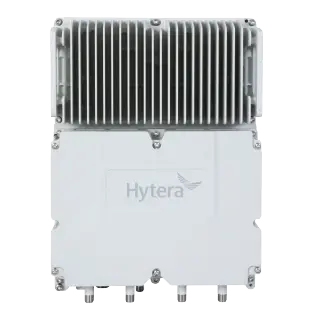
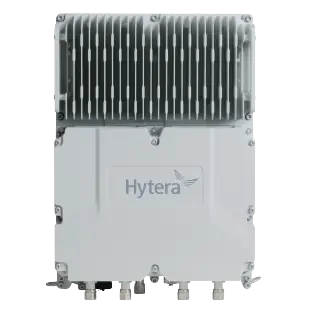
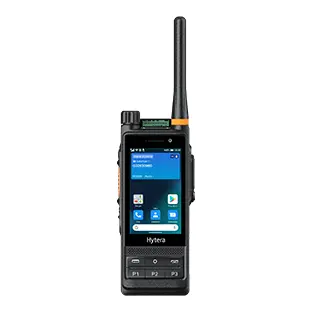
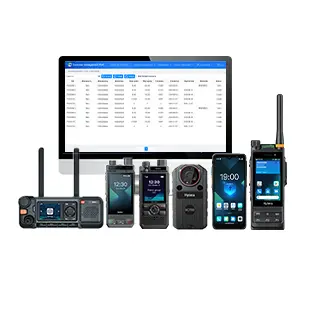
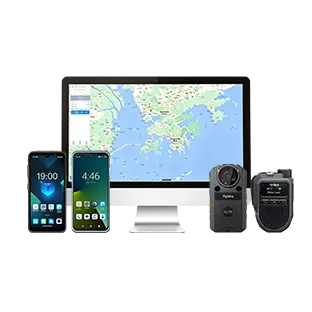
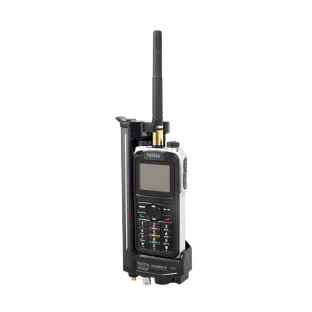
Hytera highlighted its Fast Deployment Solutions for incidents where existing communications infrastructure is unavailable, damaged or out of coverage. Visitors explored the E-Pack200 and E-Pole200, including hands-on demonstrations of the E-Pack200 communications backpack. The stand also featured digital radios, dual-mode radios, a mission-critical smart device, a managed push-to-talk service and body-worn cameras.
Products and services on display included
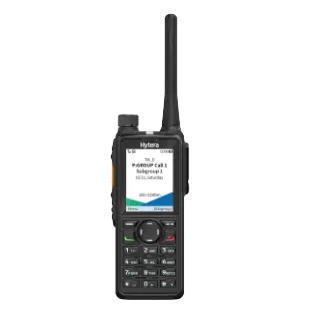
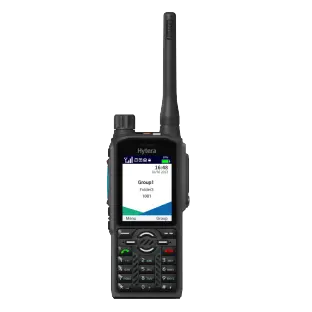
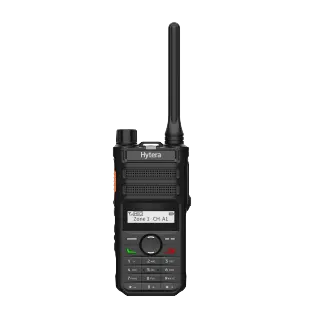
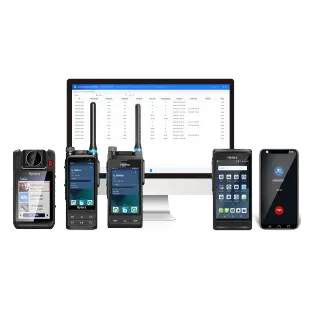
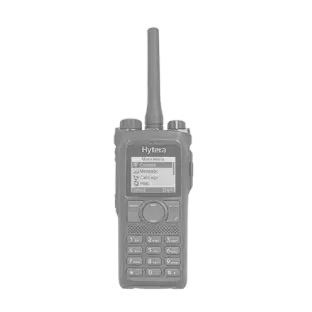
- HP785 Professional Digital Radio — noise cancellation and clear audio for high-noise environments.
- E-Pack200 and E-Pole200 Fast Deployment Solutions — designed to establish emergency communications networks within minutes.
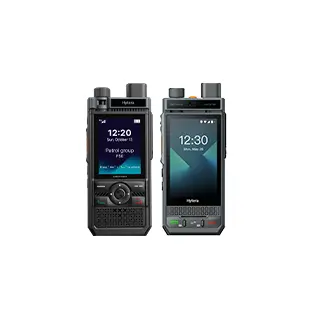
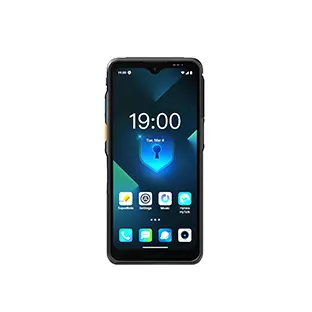
- PNC660 Mission Critical Ruggedised Smart Device — combines broadband push-to-talk, voice, video and real-time data in one rugged device.
- PDC690 and PDC580 Dual-Mode Radios — combine DMR and LTE connectivity to help maintain communications beyond conventional radio coverage.
- HALO PTX Managed Push-to-Talk Service — provides broadband push-to-talk communications over wide geographic areas.
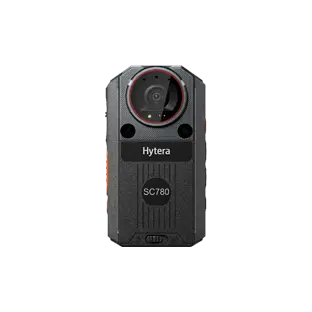
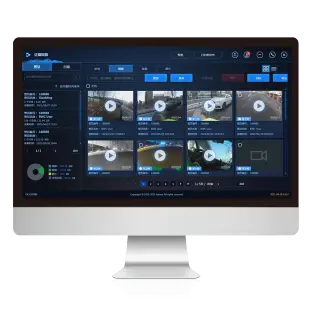
- SC700 and SC880 Body-Worn Cameras — support secure video recording and live streaming.
What communication challenges do emergency responders face during critical incidents?
Emergency responders need to share time-sensitive information while working in noisy, unpredictable and sometimes remote environments where network coverage is limited or where teams are working beyond the reach of existing radio infrastructure.
During a critical incident, these challenges can delay updates, make it harder to locate frontline responders and prevent command teams from building a clear picture of events.
What communications solution do I need for effective critical incident response?
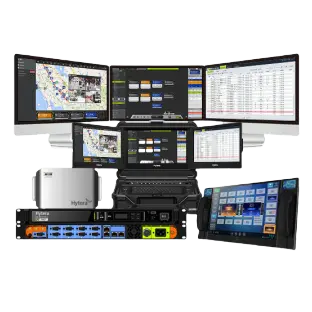
Effective critical incident response requires a connected communications system rather than a single device. It should bring together reliable voice communications, appropriate coverage, location information and, where needed, live video and data sharing.
This may include a combination of digital radios for clear voice communications, fast deployment systems for extending coverage, dual-mode devices for connecting narrowband and broadband services, and body-worn cameras for sharing visual information. The right combination depends on the incident environment, existing networks and operational requirements.
What are the latest communications solutions for emergency services?
A key development is the convergence of traditional radio communications with broadband voice, video and data services. These are examples of current emergency-services solutions within the Hytera portfolio:
- PDC690 dual-mode rugged radio: combines DMR radio functionality with an Android-based smartphone, bringing narrowband voice and broadband capabilities into one device.
- PNC660 mission-critical ruggedised device: supports mission-critical push-to-talk, video and data services over LTE and 5G networks.
- SC880 smart 5G body-worn camera: combines video recording, live streaming and push-to-talk over cellular through a compatible communications platform.
- Fast deployment solutions: provide portable devices to establish or extend communications where the coverage is unavailable.
What are Fast Deployment communications solutions?
Fast Deployment communications solutions are portable systems that can quickly establish or extend radio coverage where existing infrastructure is unavailable, damaged or out of reach. They help emergency responders stay connected in remote locations and disaster-affected areas.
Hytera's fast deployment solutions can create their own radio network and operate without an external power supply. Their portable, rugged design supports use in challenging environments, while GPS capabilities help an on-site command centre monitor the location of deployed units and team members.
What radio does an emergency frontline team need?
An emergency frontline team needs a radio with clear audio in high-noise environments, extended coverage, high receiver sensitivity, long battery life, rugged construction, and compatibility with existing communications systems.
Teams that need both DMR voice and broadband capabilities may consider dual-mode radios, while those requiring broadband push-to-talk, video and data services may consider push-to-talk over cellular (PoC) devices. The choice should follow an assessment of coverage, interoperability and operational needs, rather than the handset specification alone.
What is dual-mode communication?
Dual-mode communication means combining narrowband radio and broadband connectivity in one device. For critical missions, dual-mode radios allow frontline responders to access traditional radio voice communications alongside services such as multimedia messaging, video and location information.
Dual-mode devices give teams access to both technologies without carrying two separate handsets. Network switching and communication between systems depend on the supporting network, platform and configuration.
Why use a body-worn camera for critical incident response?
A body-worn camera solutions can provide a real-life and recorded account of an incident and, when connected to a network and platform, share live footage with a command centre. This gives decision-makers additional visual context alongside radio updates and can support efficient response as well as post-incident review and evidence gathering.
Media Contact
Anna Kondakova
Western European Marketing Manager
